
When you want CNC machined aluminum parts to look better and last longer, anodizing is the top surface treatment; but not all anodizing is created equal. You can choose ordinary anodizing (Type II) for a bright finish or hard anodizing (Type III) for extra durability. This choice depends on your project demand.
In this blog post we will break down both processes and highlight the main differences so you can choose the right anodizing type for your next project.
What is Ordinary Anodizing (Standard/ Sulfuric Type II)?
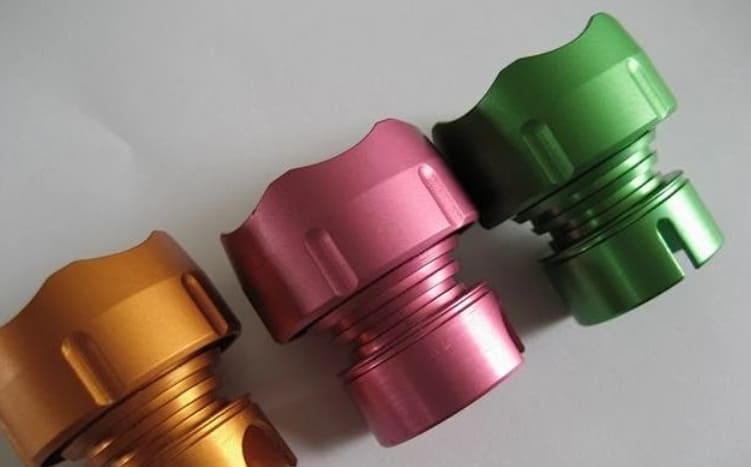
Ordinary anodizing, or sulfuric Type II, uses an electrochemical process to increase the thickness of aluminum’s oxide layer to about 1.8 to 25 μm. It is done at room temperature, normally between 15 and 25 °C.
This technique gives the surface moderate hardness (mostly 150 to 250 HV) and a porous finish. It has superb corrosion resistance and supports bright color dyeing. Therefore it is broadly used for decorating aluminum parts.
What is Hard Anodizing (Type III / Hard Coat)?
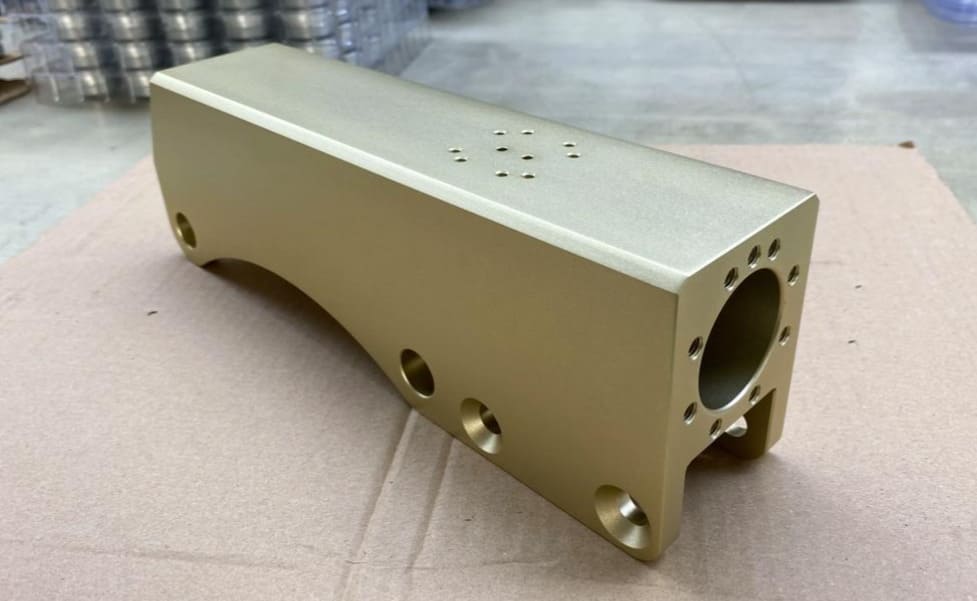
Hard anodizing, also known as Type III or hard coat, forms a much thicker and tougher oxide layer on aluminum. It’s done at cold temperatures and high voltage which results in a layer that’s 13 to 150 µm thick.
The surface can reach hardness levels above 400 HV and sometimes up to 1000 HV with the help of this anodizing. This dense layer gives aluminum extraordinary corrosion and wear resistance. Therefore it is perfect for demanding mechanical and industrial applications.
10 Main Differences Between Ordinary & Hard Anodizing
We’ve covered the basics of both anodizing methods. Now we’ll look at the main differences between type II and type III anodizing.
1. Coating Thickness
Ordinary anodizing, Type II, forms a thin layer. Its thickness is normally 1.8 to 25 micrometers (µm). Hard anodizing (Type III), on the other hand, forms a much thicker and stronger layer; and its thickness falls between 13 and 150 µm.
2. Hardness and Density
A standard anodized surface is 150 to 250 HV hard which is a basic protection. While hard anodizing has 300 to 600 HV hardness and can go up to 1000 HV. This hardness is as tough as many steels and makes CNC parts wear resistant.
3. Voltage and Current Density
Final properties of the coating depend on the electrical settings. In any anodizing the oxide layer forms as a result of current density applied during the process. Regular anodizing uses a lower current density, mostly between 1.0 & 1.5 A/dm² and at 15 to 30 volts. While hard anodizing needs more electrical power. It uses 2 to 5.5 A/dm² and up to 100V to produce a thicker and tougher surface.
4. Electrolyte and Temperature
Both processes use sulfuric acid as an electrolyte but at different temperatures. Standard anodizing is done at room temperature, usually at 15 to 25°C. This warmer environment forms a more porous layer. Hard anodizing, on the other hand, uses a much colder electrolyte, often below 5°C. The lower temperature slows down oxide dissolution and helps form a denser, harder coating.
5. Wear and Abrasion Resistance
The difference in wear resistance is huge. Hard anodizing produces a surface that resists wear extremely well and can be even harder than case hardened steel. It is good for parts that are exposed to high friction or heavy industrial use.
Unlike hard anodizing, regular anodizing only gives moderate protection from scratches and scuffs. Therefore it is good for decorative items or parts that don’t experience too much mechanical wear.
6. Corrosion Resistance
Both regular and hard anodizing increase corrosion resistance. Hard anodizing produces a denser and thicker coating which gives better protection. This is good for marine or industrial use. A high quality hard anodized layer can last over 336 hours in a salt spray test without showing corrosion.
Regular anodizing protects general use parts well but relies on a sealing step to close surface pores and improve its defense.
7. Porosity and Sealing Needs
Regular anodizing results in a surface with many pores which is good for dye absorption. But these pores need to be sealed – often with hot water or chemicals – to prevent corrosion.
Hard anodizing, on the other hand, produces a layer that is much denser and less porous. To keep the surface as hard and wear resistant as possible this layer is usually left unsealed; and for extra lubricity, PTFE (Teflon) can be added to the surface.
8. Dimensional and Surface Effects
The anodizing process causes the coating to grow both inward and outward from the aluminum’s surface. Regular anodizing (Type II) adds 1.8 to 25 µm thickness per layer with about half of that on each side. This results in little change to part size and keeps the surface smooth.
Whereas, hard anodizing (Type III) produces much thicker layers i.e., up to 150 µm and can make the surface 2 to 3 times rougher than bare metal. Plus, precision CNC parts need tighter dimensional control when using hard anodizing.
9. Thermal and Electrical Properties
Anodizing creates an aluminum oxide layer which is an electrical insulator. Hard anodizing produces a thicker and tougher layer so it insulates better and can handle up to 2000V. This coating also conducts less heat as compared to bare aluminum which helps with heat control. Moreover hard anodized surfaces resist heat well and can survive brief exposure to 2000°C.
10. Appearance and Costing
The two processes produce different looks. Ordinary anodizing is good for decorative purposes. It’s porous so it can absorb a wide range of dyes and produce bright and varied colors. Also it is cheaper because it uses less power, requires a simpler setup as well as finishes faster.
Unlike ordinary anodizing, hard anodizing produces a much thicker layer. This limits color choices so most parts end up with a black or dark gray finish. It is more expensive, often 1.5 to 2.5 times more as compared to standard anodizing. Longer processing, higher energy use and more complicated equipment drive up the cost.
But for industrial applications, RICHCONN’s streamlined process and bulk processing can help keep total costs down; particularly when you need consistent quality at high volume.
Hard Anodizing vs Ordinary Anodizing: Uses
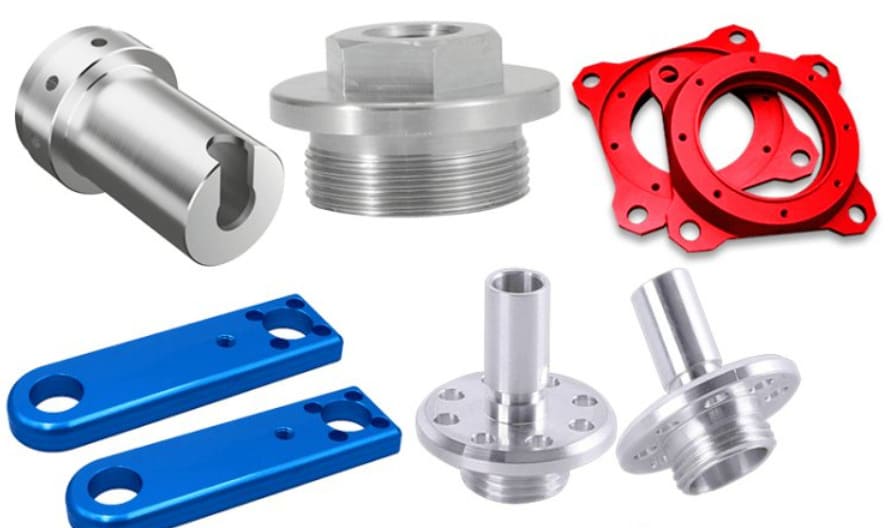
Ordinary Anodizing
1. Consumer Electronics
Manufacturers use ordinary anodizing to give consumer electronics a premium look. Sturdy earbuds, colorful smartphone covers and slim laptop bodies often have this finish.
2. Automotive (Non‐critical Aesthetic Parts)
Automakers use ordinary anodizing for non essential parts that need to look good. Custom gear knobs, interior trim and dashboard accents often have this process for a clean and stylish finish.
3. Interior Design and Architecture
Architectural projects benefit from ordinary anodizing. It protects facade panels, window frames and door handles from weathering and at the same time provides a tough decorative surface in many colors.
4. Packaging and Retail
Colored anodizing adds value to cosmetic containers, reusable bottles and branded aluminum packaging. These products stand out visually and get extra surface protection.
5. Lighting and Furniture
Modern furniture and lighting products mostly use ordinary anodizing. Lamp housings, chair legs and other fixtures get an attractive and strong finish that suits modern designs.
Hard Anodizing
Aerospace
Actuator housings, landing gear and valve blocks in aircraft get hard anodized coatings. These thick layers protect parts from corrosion and wear during harsh flight conditions.
Medical Equipment
Surgical handles and housings for orthopedic tools need hard anodized layers. These can withstand repeated sterilization, cleaning and many years of clinical use.
Defense and Firearms
Manufacturers apply hard coatings to optic mounts, trigger guards and weapon receivers. This gives the surface maximum scratch resistance and extends its life, even with frequent handling.
Marine and Offshore
Underwater manifolds, propeller housings as well as marine hydraulic parts have hard anodizing on their surface. This coating resists saltwater corrosion and abrasion.
Heavy Machinery and Industrial Automation
Pneumatic cylinders, robotic arms and wear guides use hard anodizing. This finish helps them withstand heavy loads, high friction and tough industrial conditions.
Hard Anodizing vs Ordinary Anodizing: Pros and Cons
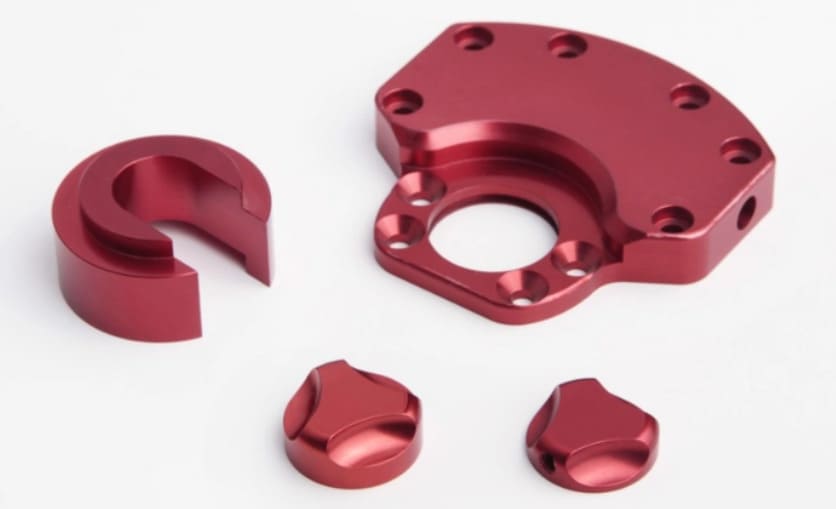
Ordinary Anodizing (Type II)
Pros
- Affordable: Ordinary anodizing is cheaper as compared to hard anodizing. Moreover less energy and time are used.
- Lightweight Finish: The oxide layer is thinner (1.8 to 25 µm) so it adds little weight or bulk. This makes it good for precision and lightweight parts.
- Aesthetic Versatility: You can dye these parts in almost any color. Therefore it is great for consumer products and brand specific designs.
- Quick Turnaround Time: Process of ordinary anodizing is faster therefore you have shorter delivery times and less downtime.
- Improved Corrosion Resistance: When sealed properly, surfaces resist moisture and daily wear.
Cons
- Lower Wear Resistance: This layer is not as tough. It can scratch or wear out faster under heavy use.
- Limited Thickness: Ordinary anodizing doesn’t work for parts that need thick, deep coatings for high abrasion or impact.
- Color Fading Over Time: Bright colors or frequent UV exposure can cause fading sooner for this type of anodizing as compared to natural finishes. To address this issue, RICHCONN applies advanced sealing techniques to help dyes last longer and stay vibrant even for parts used outdoors or in sunlight.
Hard Anodizing (Type III)
Pros
- Extraordinary Wear Resistance: Oxide layer formed by hard anodizing is thick and tough (13 to 150 µm+). Therefore it resists friction and repeated use very well.
- Exceptional Corrosion Resistance: This dense coating blocks rust and chemical damage. It performs well in marine and other industrial environments.
- High Hardness: Hard anodized coatings mostly measure over 400 HV of hardness and can reach up to 1000 HV. It is harder as compared to most case hardened steels and is good for demanding machine settings.
- Electrical Insulation: Thicker coatings of hard anodizing provide better dielectric strength. Sensitive electronics get extra protection through it.
- High‐Performance Tolerance: Hard anodized finish remains stable under extreme temperatures, high pressure or during wash-downs.
Cons
- Higher Cost: The process is more complicated. It needs more energy for chilling the bath and a higher voltage so it costs more.
- Longer Processing Time: Creating a thick, dense layer takes much longer time as compared to standard anodizing.
- Fewer Color Options: This coating makes the surface dark and dense which is difficult to dye; thus limiting chances of coloring to only bronze, black or gray.
Related Blogpost: How Much Does Anodizing Cost?
Hard Anodizing vs. Ordinary Anodizing: Side-by-Side Comparison
| Aspect | Ordinary Anodizing (Type II) | Hard Anodizing (Type III) |
|---|---|---|
| Coating Thickness | 1.8 to 25 µm | 13 to 150+ µm |
| Electrolyte Temperature | 15 to 25 °C (room temp) | 0 to 5 °C (near freezing) |
| Hardness | C~150 to 300 HV | >400 HV (up to 1000 HV) |
| Voltage & Current | Moderate (~15 to 30 V; 1 to 1.5 A/dm²) | High (≥100 V; 1.5 to 5.5 A/dm²) |
| Porosity & Sealing | Porous; sealing needed for corrosion resistance | Denser; may remain unsealed; PTFE impregnation common |
| Corrosion Resistance | Good (when sealed) | Outstanding (particularly when sealed or impregnated) |
| Wear Resistance | Moderate | Extraordinary; suitable for high friction or load bearing parts |
| Electrical Properties | Good insulator; used for low voltage applications | Strong insulator; higher dielectric strength |
| Surface & Dimensional Impact | Smooth, low surface roughness; minimal dimensional impact | Rougher surface; greater dimensional change—design tolerance needed |
| Cost | Lower cost, faster processing | Higher cost because of longer time & stricter control |
| Appearance & Dyeability | Wide color range via dyeing | Limited dyeability; mostly dark gray/ black |
Which Anodizing Process Should I Choose?
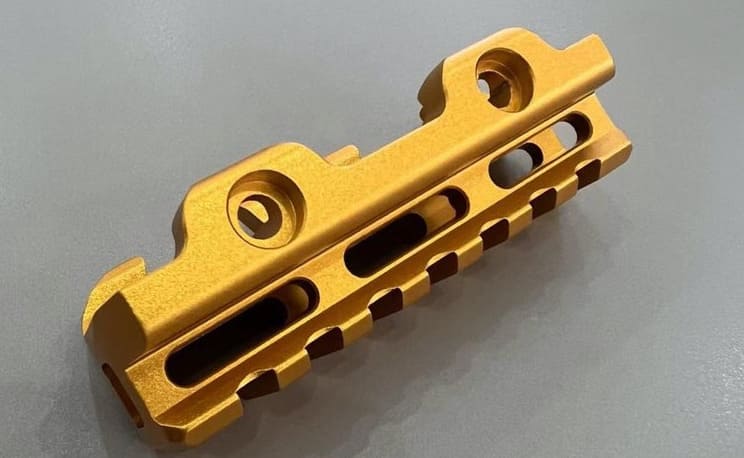
Your choice between hard and standard anodizing depends on the part and its intended use. Standard anodizing is best for lower cost, colorful finishes or light wear. Whereas hard anodizing is the way to go if you need maximum durability, highest wear resistance or strong corrosion protection. Always review your budget, tolerances and the environment your part will be in before you decide.
If you need help choosing the right anodizing type for your project, RICHCONN’s engineers can help you and suggest the best process.
To Sum Up
Standard and hard anodizing both make aluminum CNC parts more durable but each process is for different applications. Standard anodizing is good if you want affordable protection and bright colors. Opposingly, hard anodizing is better if you need strong resistance to corrosion and wear in harsh environments.
If you are not sure which anodizing type fits your needs, contact Richconn. Our team offers expert guidance and delivers superior quality CNC part finishing services that meet your project needs.
Related Questions
The 6000 and 7000 series alloys like 6061 and 6082 are best for hard anodizing. 5000 and 6000 series alloys like 6063 are best for standard (decorative) anodizing.
Sealing the anodized layer is a must; especially for Type II anodizing. It closes the pores which greatly increases color stability, corrosion resistance and wear resistance. This step improves both the lifespan and performance of the part.
Yes anodizing forms a surface layer that can build up on tapped or threaded areas. This extra layer can change thread dimensions and move the part out of tolerance.
Choose anodizing providers with skilled staff, strict quality control and good customer reviews. Many engineers choose RICHCONN because they offer certified finishing (ISO 9001) and advanced CNC machining in one place. This is best for complicated or multi step projects that need reliable results.