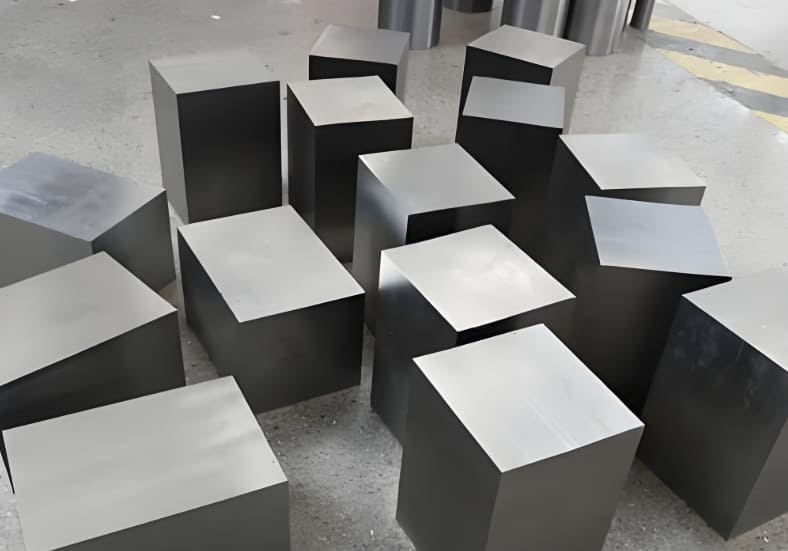

There are some cases where a part needs to be machined but no design documentation or blueprints are available. This limitation can slow down manufacturing or hinder repairs. However, with modern technology & tools, it is practical to precisely recreate parts with the help of reverse engineering procedure.
This blog post provides you a step‐by‐step guide on how to create CNC machine parts through reverse engineering without blueprints.
What is Reverse Engineering in CNC Machining?
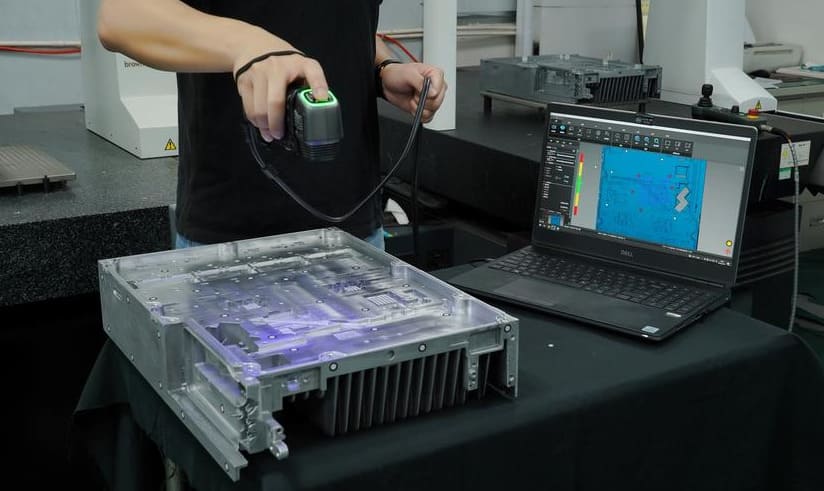
Basically, in CNC machining, reverse engineering refers to disassembling a physical component to understand how it was engineered and built. This procedure begins with measuring the object with extreme accuracy. These measurements help develop a comprehensive 3D digital model. This reconstructed digital blueprint then instructs the CNC machine to create an identical copy of the base model.
Technologies and Equipment for Reverse Engineering
Reverse engineering with CNC machining is highly dependent on using the appropriate instruments. Here are the key technologies that make this procedure possible.
3D Scanning
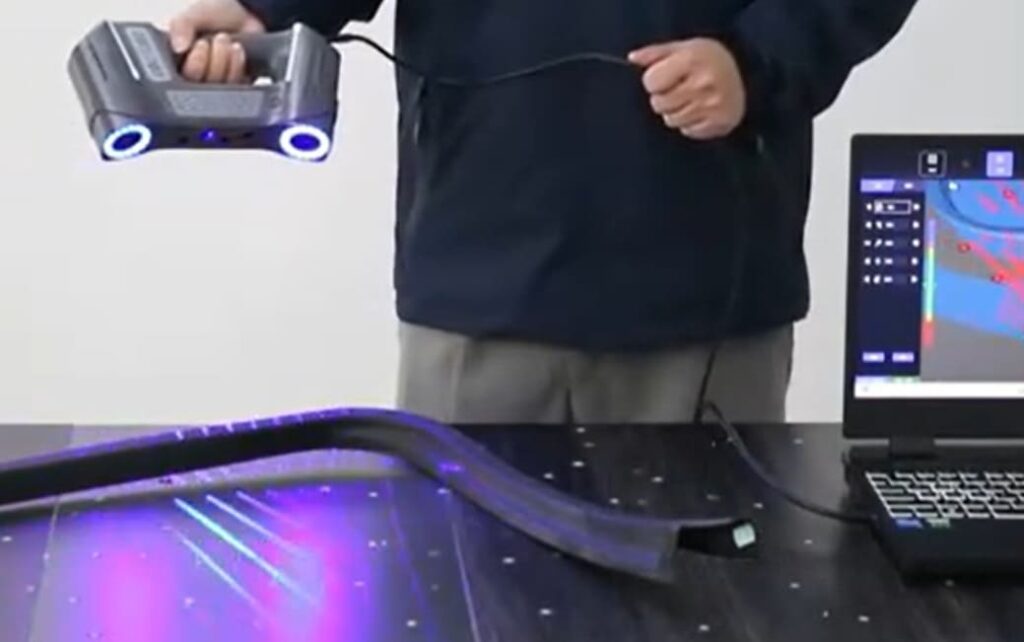
3D scanning has become a crucial part in reverse engineering. It captures the geometry of a component with great accuracy and minimal delay. This non‐contact approach is particularly suitable for parts with complex surfaces.
Structured Light Scanners
Structured light scanners project a patterned light onto an intended part. Cameras record how the pattern changes as it interacts with the surface which permits the system to calculate the 3D shape of that part. This scanning technology is very quick and is perfect for capturing high‐resolution textures on soft‐surfaced objects without distorting them.
Laser Scanners
Laser scanners employ a projected laser line to measure the shape & size of an object. They can acquire millions of data points every second with micron‐level accuracy. These scanners are perfect for scanning complex shapes as well as detailed surfaces.
Software for Data Refinement
Special software is required to convert raw scan data into models ready for CNC machining. These special tools process, refine as well as translate 3D data into machining instructions.
CAM Software
CAM software – like Autodesk Fusion 360 & CAMWorks – generates NC code and toolpaths for CNC machines. It streamlines the programming procedure and optimizes machining plans. In this way, it can reduce cycle time by up to 85%. This allows for precise and better production of components using digital models.
CAD Software
CAD software – i.e., SolidWorks & Geomagic Design X – convert 3D scan data into editable, parametric models. Manufacturers utilize these softwares to make solid models with tolerances of up to ±0.01 mm.
Mesh Repair Tools
Raw 3D scans can exhibit defects such as gaps or holes. Mesh repair tools like Meshmixer or MeshLab solve these issues and refine the model as well.
Coordinate Measuring Machines (CMMs)
Coordinate Measuring Machines use a probe that touches certain points on the surface of a component to measure & store their location. CMMs measure strict tolerances with a high degree of precision and play a critical role in quality control. They can also produce point cloud data for CAD modeling.
Step‐by‐Step Procedure of CNC Machining Without a Blueprint
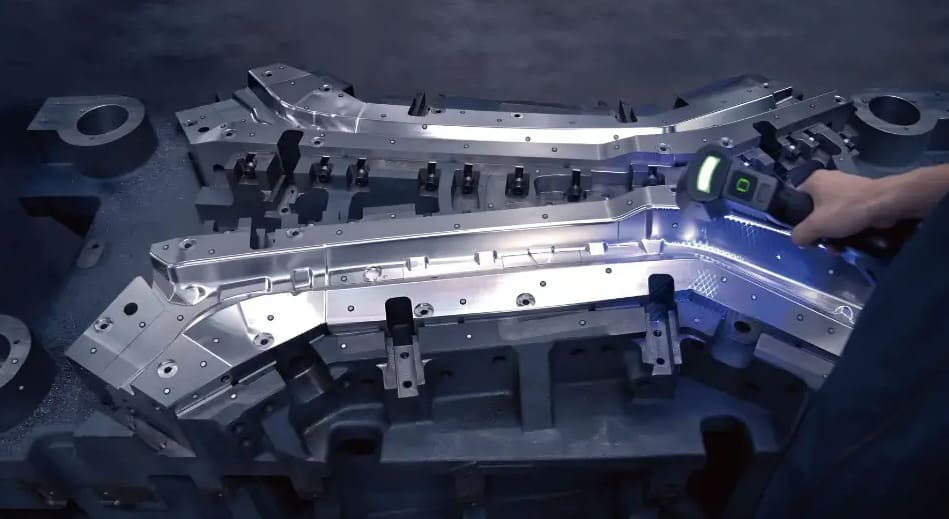
Reverse‐engineering a physical part without reference drawings needs a systematic procedure. The procedure goes through multiple steps – i.e., from scanning to production. Each & every step makes sure that the new part is true to the original, in the absence of blueprints.
1. Preparation & Thoughtful Planning
Start by setting defined objectives for your project. Pick scanning software and technology based on the required accuracy as well as geometric difficulty of the part. Thoughtful planning at this step helps minimize problems in future.
2. Data Collection
Use a Coordinate Measuring Machine (CMM) or a 3D scanner to record the shape of intended part. This step records the measurements and generates a “point cloud,” which becomes a digital sketch of the surface.
3. Data Refinement and Model Construction
After data acquisition, import that point cloud into modeling software. Next, filter & refine the data and then create a precise as well as editable 3D CAD model. This model serves as the updated digital blueprint for production.
4. Toolpath Creation
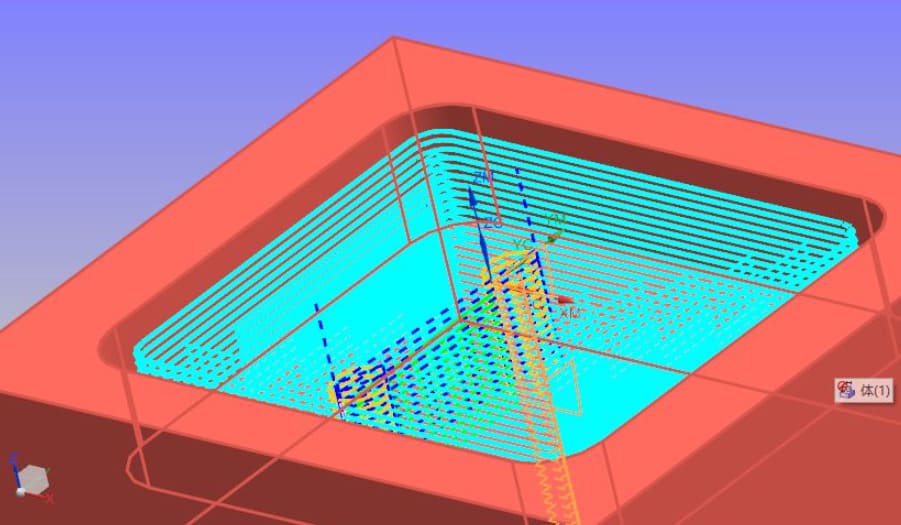
After completing the CAD model, you have to utilize CAM software to plan cutting paths. The software translates the design into G‐code which gives step‐by‐step instructions to the CNC machine.
5. CNC Machining
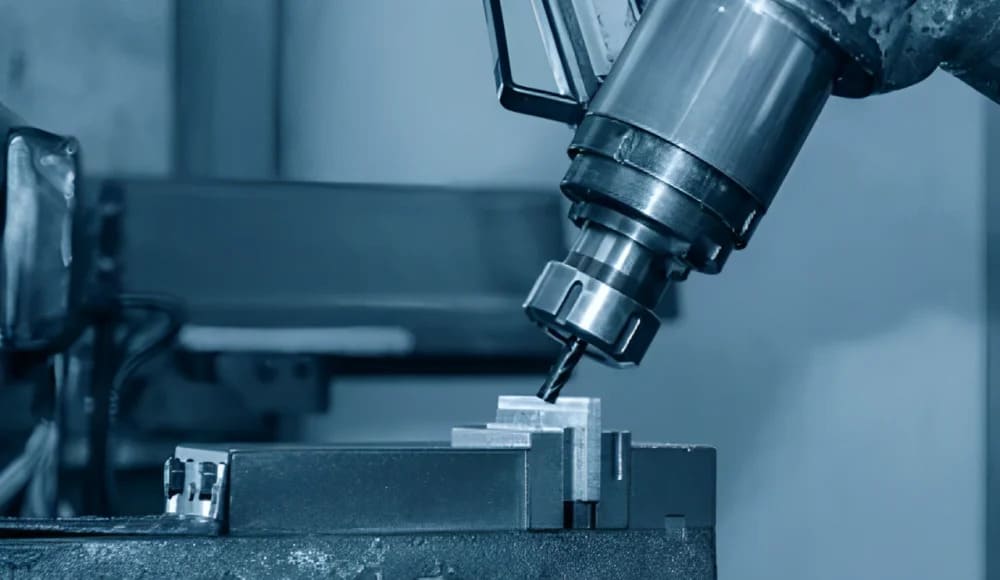
Next import the G‐code onto the CNC machine. The machine processes the raw material as defined by the instructions.
In the end inspect the quality to ensure that the component is true to the original specifications.
At RICHCONN, our CNC experts regularly make parts from plastics, metals & carbon fiber, with only samples. We use imaging of toolpaths, 5‐axis machining and in‐process probing to obtain ±0.01 mm precision & a smooth finish , that meets stringent requirements.
Advantages of Reverse Engineering

Ability to Remanufacture
Reverse engineering makes it practical to remanufacture components if suppliers stop making them or their old blueprints are lost. This method keeps old machines operational and businesses don’t have to spend additional money on purchasing new machines.
Budget‐friendly Manufacturing
When companies incorporate reverse engineering rather than purchasing OEM components, production expenses can be reduced by 30% to 50%. By evaluating current components, companies minimize downtime and design costs.
Application‐Specific Modification
Reverse engineering allows companies to adjust parts for their special demands. They can pick alternative materials or modify the design for their particular use.
Supports Innovation
Manufacturers use reverse engineering to review & improve existing designs. They can select superior materials, identify weaknesses and enhance performance of the product. These changes usually increase both performance and reliability.
Limitation and Solutions in Reverse Engineering for CNC Machining
There are a number of key challenges in reverse engineering for CNC machining. Engineers use specialized strategies to solve these challenge.
Complex Shapes
Capturing organic or complex shapes with precision is technically demanding. Modern non‐contact 3D scanners solve this limitation. They record very high volumes of data points and map extremely detailed surfaces with accuracy, without making contact with the part.
Precision and Data Quality
Maintaining high accuracy is usually the most difficult part. Misalignment or scan noise can lead to bad models.
Engineers use advanced scanners to capture geometric data down to a few microns accuracy.
At RICHCONN, we assess every scan in our ISO‐certified quality lab. These assessments guarantee that you receive dependable components.
Toolpath Planning
Converting a reverse‐engineered model into a well‐optimized toolpath is a difficult task.
Here advanced CAM software are used to creates fine‐tuned G‐code. This guarantees that the CNC machine creates each part with both efficiency & precision.
Material Factors
Different materials react in distinct ways during scanning. Transparent or reflective surfaces can compromise your data.
To fix this, engineers use special scanners or surface sprays. These approaches help to obtain correct measurements for all types of materials.
Uses of Reverse Engineering for CNC Machining
Aerospace Industry
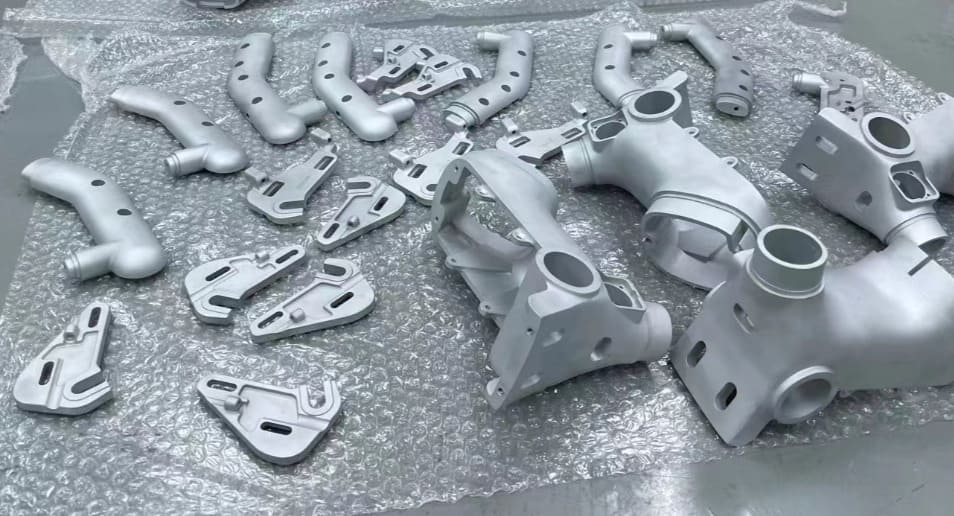
Reverse engineering fixes the issues of costly or unavailable OEM components in aerospace sector. Companies use CAD models and high‐precision scanners to recreate complex parts such as hydraulic valves or turbine blades.
Automotive
Repairing latest vehicles and restoring classic cars usually relies on reverse engineering. When engineers stop making specific components then CNC machines & 3D scanners facilitate the creation of exactly the same replicas.
Industrial Machinery
When a manufacturer has gone out of business or original documentation is unavailable then industrial businesses employ reverse engineering. Through CNC machining & 3D scanning, they can recreate necessary parts for machinery, such as actuator parts and T‐shaped brackets.
Consumer Electronics
Electronics manufacturers depend on reverse engineering to update old hardware and analyze competing products. They scan and model components to create prototypes, build advanced versions and speed up product design cycles. This method has proven to be extremely useful for custom connectors, casings as well as heat sinks.
To Sum Up
Reverse engineering permits engineers to repair, rebuild or improve CNC machined components, specially when blueprints are not available. By using precise modeling, latest scanning and expert machining, companies can manage costs, reduce lead times and also maintain critical machines.
If you need any kind of precision CNC machining services then Richconn is your best option. You can contact us anytime.
Related Questions
To obtain precision, technicians implement precise measurement tools, 3D scanners and also create dimensionally accurate CAD models as well. Moreover, they test the new component and compare their dimensions against the original as well.
Without a digital design file, like CAM or CAD, CNC machines cannot reproduce complex shapes. Copying demands either the reverse‐engineered or original design.
Reverse engineering speeds up development of a product by giving detailed models of current components. It supports fast prototyping, decreases design work time and helps enhanced or new products to launch into the market more quickly.
Reverse engineering of legally owned products is permitted but it may violate agreements or patents. In the US, commercial use often needs the owner’s approval. While in the EU, reverse engineering is permissible for publicly available products.
Reverse engineering decrease expenses by cutting out the costly trial‐and‐error, making manufacturing more effective, optimizing process & material selection and decreasing research & development costs.