
When a system deals with high pressure, extreme temperatures, or corrosive fluids, even the most minor leak can cause severe damage. Bellows seals are built to handle these kinds of conditions, offering a tight, flexible seal that stays reliable even under stress. You’ll often see them in chemical pumps, vacuum chambers, steam systems, and semiconductor tools, anywhere a clean, leak-free seal is critical. Unlike traditional seals, they manage pressure and movement without relying on sliding parts or dynamic O-rings. This NASA PDF guide on metal bellows applications outlines the use of bellows in aerospace and vacuum systems.
In this article, we’ll break down how bellows seals work, what they’re made of, their applications, and what to consider when choosing one for your system.
What Are Bellows Seals?
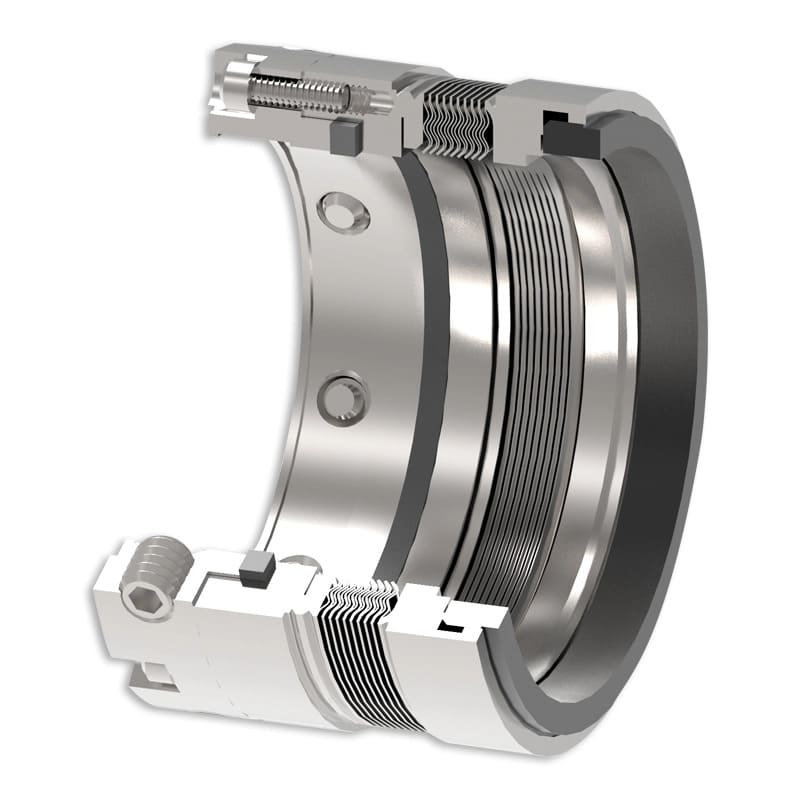
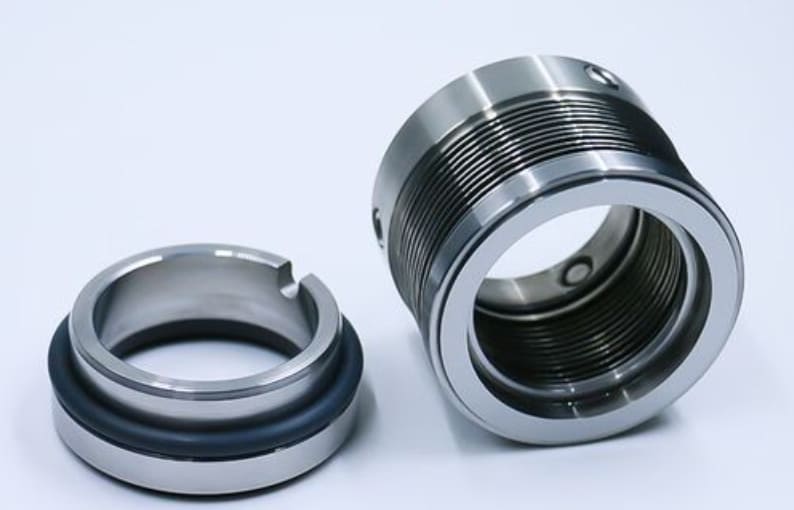
A bellows seal is a type of mechanical seal that uses a flexible metal bellows instead of a conventional spring and secondary seal setup. It’s built to create a tight, leak-free seal in rotating equipment like pumps, compressors, and valves, especially in demanding environments where heat, pressure, or chemical exposure would damage traditional seals.
Unlike standard seals, bellows seals have no dynamic O-rings or elastomers that rub or wear out. Instead, they rely on the expansion and compression of a thin-walled metal bellows to maintain sealing pressure. This makes them ideal for systems that require ultra-clean operation, such as in chemical processing, vacuum systems, or semiconductor tools.
Key Components of a Bellows Seal
Every bellows seal has a few core parts that make it work. A typical bellows seal includes:
Metal bellows element
This is the most essential part, which acts like a flexible spring. It’s made of thin metal plates welded together in a corrugated pattern. This gives it the ability to flex and compress while staying leak-tight.
Sealing faces
One face rotates with the shaft while the other stays in place. These faces are made of materials that can resist wear and heat, like silicon carbide, carbon, or ceramic. A good seal depends on how flat and smooth these faces are.
Hardware
This includes retainers, glands, and housings. These parts keep the whole seal in place and connect it to the pump or valve body. You’ll also find drive mechanisms like pins or set screws that help transfer motion from the shaft to the rotating parts.
Optional secondary seals or backup rings
Some bellows seals may also include backup rings or static O-rings, usually made of PTFE or other chemically resistant materials. These add extra protection in high-pressure or vacuum systems but don’t move during operation.
How Bellows Seals Work
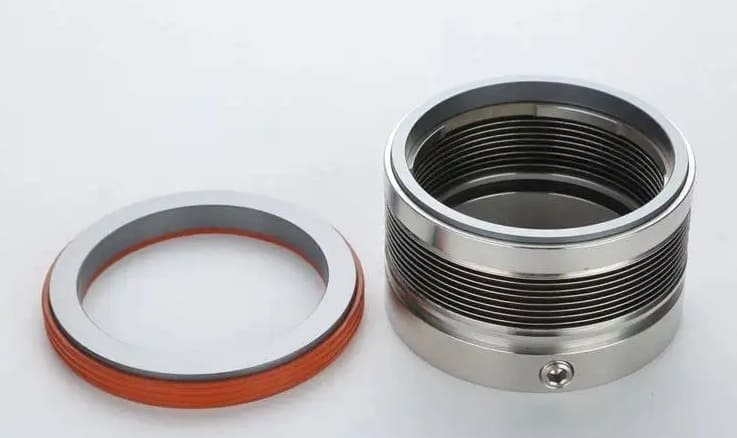
Bellows seals rely on metal bellows and precision sealing surfaces to manage fluids under pressure and temperature. Here’s how they operate step by step:
1. Sealing Function
When the shaft rotates, the bellows element allows the two sealing faces to stay in contact. As fluid pressure acts from inside, it forces the faces together. The bellows compresses slightly, applying constant pressure and maintaining a tight seal. There’s no sliding elastomer, just metal-on-metal or metal-on-ceramic contact that keeps fluids contained.
2. Axial Flexibility and Pressure Containment
The bellows element flexes along its axis, compressing or expanding in response to fluid pressure. This flexibility means the seal adjusts automatically: higher fluid pressure compresses the bellows, pressing the faces together; lower pressure lets it relax slightly. The result is a self-adjusting seal that maintains contact without needing external springs or O‑rings.
3. Compensation for Shaft Movement and Thermal Expansion
Unlike rigid seals, bellows seals absorb axial shaft movement and thermal expansion without breaking contact. When the shaft moves or the environment heats up, the bellows flexes accordingly. This movement keeps the seal faces aligned and prevents misalignment-induced leaks. It also reduces stress on the shaft and bearings, leading to longer equipment life.
How They Prevent Leaks in Tough Environments
Bellows seals prevent leaks by maintaining a consistent, pressurized contact between their sealing faces, even under harsh conditions. As ASME’s white paper on pressure compensation in metal bellows explains, the internal pressure helps the seal work better in high-pressure systems. It pushes the sealing faces together, creating a tighter seal as the pressure rises. This makes bellows seals ideal for situations where pressure can fluctuate during operation.
In vacuum environments, the seal works in reverse. The pressure outside the system collapses the bellows slightly, which still keeps the sealing faces in contact. Because there are no sliding O-rings or elastomers, there’s nothing to suck air into the system or degrade over time. The all-metal construction helps ensure leak-tight performance in both directions, whether the system is under pressure or vacuum.
Additionally, bellows seals are built as a single welded structure, so there are no joints or seams that could allow fluid to escape. This design minimizes potential leak paths, even when the shaft moves or the temperature shifts. Combined with chemically resistant materials and precisely machined seal faces, the bellows structure provides reliable sealing performance in environments where conventional seals would likely fail.
Types of Bellows Seals
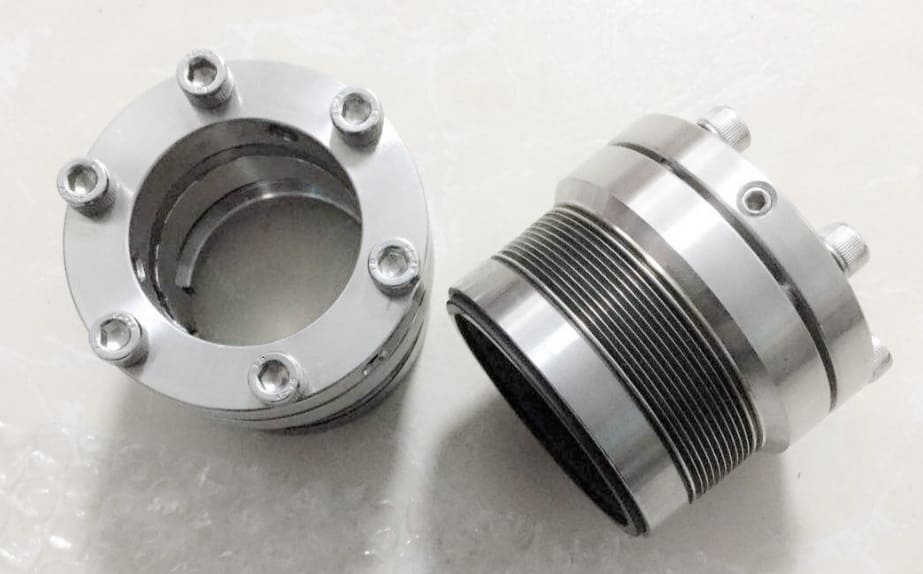
Bellows seals come in different styles, each suited to a specific type of duty. Depending on the application, pressure range, temperature, and media type, different bellows seal designs are used. Each has its advantages and limits, so it’s essential to understand the options before making a choice. Here are the main types used in industry:
1. Edge-Welded Metal Bellows
This type is made by pressing stamped metal diaphragms into shape and welding them edge-to-edge. The result is a highly flexible and precise bellows that can flex up to 90% of its free length, compared with just 20% for formed types. Edge-welded bellows offer excellent fatigue life, tight spring rates, and full control, making them ideal for high-pressure, clean, and high-cycle systems.
2. Formed Bellows (Cold‑formed, Hydroformed, Electroformed)
Formed bellows are made by reshaping a metal tube, either by rolling, hydraulic (hydroforming), or electroforming. They cost less to produce, but they’re less flexible and tolerate fewer cycles than edge-welded types. Formed bellows are typically used in simpler, low-pressure applications where cost and volume matter more than precision.
3. Electroformed Bellows
A subtype of formed bellows created by plating metal onto a mandrel, then removing that mandrel. Electroformed bellows can have extremely thin walls, just a few micrometers thick, and are very precise. They’re best for delicate, low-pressure applications where minute movement sensitivity is essential.
4. Machined Bellows
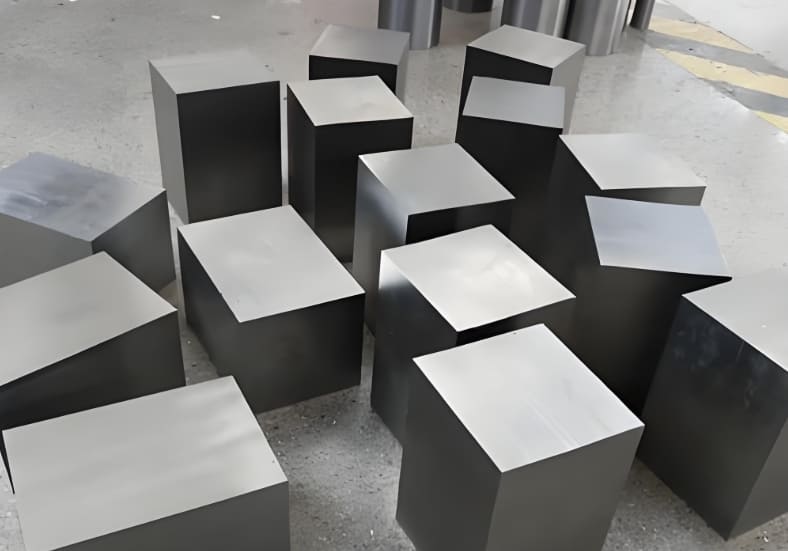
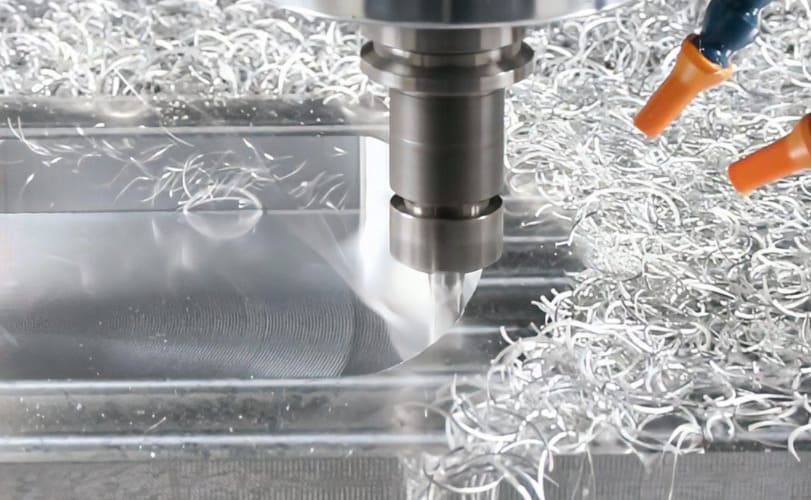
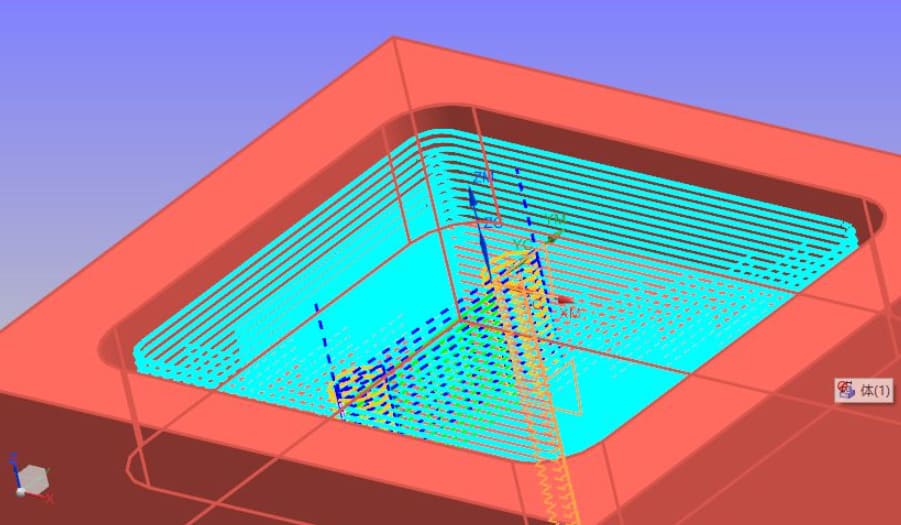
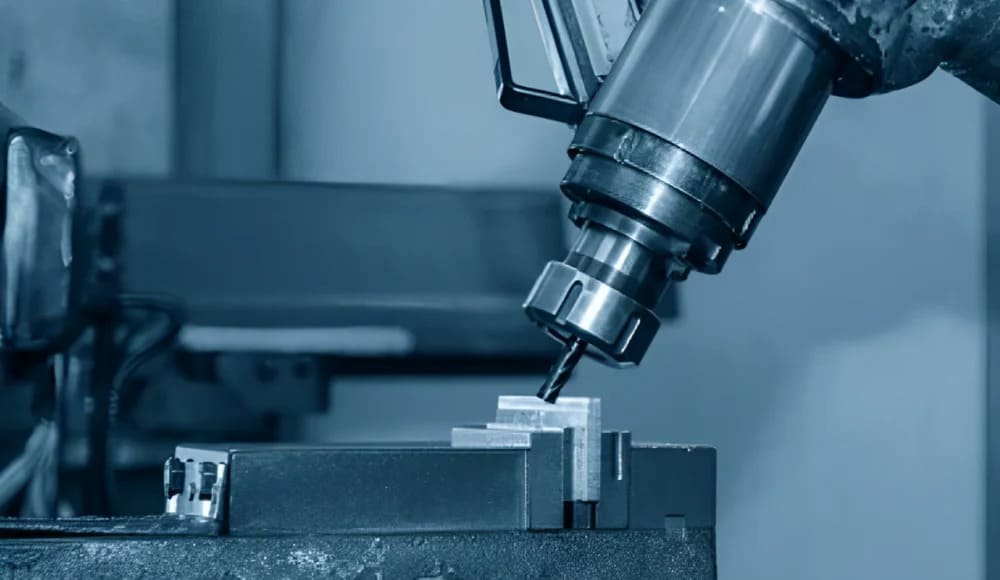
Machined bellows are milled directly from solid metal blocks. They offer high strength and precision but are more costly. You’ll find them in aerospace, high-performance actuators, or systems with tight dimensional and pressure specifications. Check here to learn more about our expert CNC milling services.
5. Elastomer Bellows (Rubber or PTFE)
These are made from flexible polymers and are ideal for low-temperature, low-pressure, or general-purpose use. They’re not suited to high temperatures or aggressive chemicals, but they work well in water pumps, HVAC systems, and basic industrial applications.
Single vs. Dual Bellows Seal Designs
Single bellows seals are designed for systems where any leakage is acceptable or can be safely managed. They’re simple, cost less, and are easier to install. You’ll see them in applications using non-toxic or non-hazardous fluids.
Dual bellows seals, on the other hand, are built for dangerous or ultra-sensitive applications. They use two sets of sealing faces and often include a barrier fluid in between. This setup offers extra protection and keeps toxic or flammable fluids completely sealed in. It’s the better choice when safety, environmental control, or zero leakage is required. Dual seals also help when sealing fluids that crystallize, clog, or dry up when exposed to air. The barrier fluid keeps everything inside stable.
Comparison Table: Single vs. Dual Bellows Seal Designs
| Feature | Single Bellows Seal | Dual Bellows Seal |
|---|---|---|
| Sealing Setup | One set of sealing faces | Two sets of sealing faces (back-to-back or face-to-face) |
| Leak Control | Allows minor leakage | Designed for zero external leakage |
| Best For | Non-toxic or clean fluids | Hazardous, flammable, or toxic fluids |
| Cost | Lower | Higher due to added components |
| Use Case Examples | Water pumps, light oils, and clean processes | Chemical processing, pharmaceutical systems, and vacuum equipment |
Common Applications of Bellows Seals
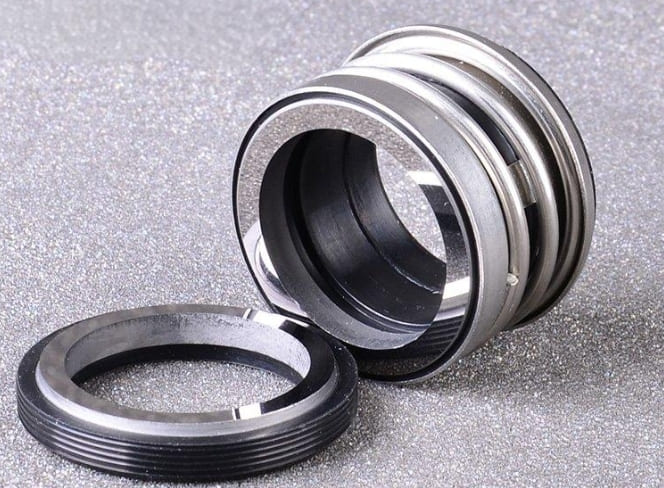
Bellows seals are used in systems where reliability, cleanliness, and leak prevention are critical. Their ability to handle pressure changes, movement, and harsh conditions makes them vital across a wide range of industries.
Check where they’re most commonly used and why below:
1. Pumps in Chemical and Pharmaceutical Industries
Bellows seals are widely used in chemical and pharmaceutical pumps and mixers where handling aggressive or high-pressure chemicals is routine. They resist corrosion and maintain a tight seal even when exposed to solvents, acids, or high-flow agitators. Bellows seals also handle axial shifts without leaking, making them ideal for industrial reactors and dosing equipment. Their flexibility helps equipment stay clean and compliant with hygiene standards in medical settings.
2. Vacuum Systems and Semiconductor Tools
In high-vacuum or ultra-clean environments like semiconductor tools, bellows seals maintain airtight chambers during chemical vapor deposition, etching, or ion implantation. Their welded design prevents outgassing, and the metal structure stays leak-proof across cycles of vacuum and pressure. That’s why they’re often used in vacuum valves and semiconductor equipment. For example, bellows seals are essential to prevent seal failure in semiconductor process tools.
3. Cryogenic Systems
Bellows seals perform well at extremely low temperatures, such as in liquid nitrogen or helium systems. Their metal-only structure handles cryogenic contraction without cracking, and keeps seals leak-tight at temperatures below −153 °C. Designs using indium or metal edge seals meet tight vacuum requirements found in cryogenic applications like MRI or cryogenic pump systems.
4. High-Purity or Corrosive Environments
When systems require zero contamination or are exposed to corrosive fluids, bellows seals built from Inconel, Hastelloy, or specialty stainless steels stand out. These materials withstand chemical corrosion and don’t shed particles, making the seals ideal for high-purity water systems, aggressive chemical processing, or sterile operations.
5. Steam or High-Temperature Fluid Handling
Bellows seals are ideal for handling hot fluids and steam in power plants, boiler feed systems, and high-temperature pipelines. They remain flexible under thermal load, maintain tight seals over cycles, and resist scaling. Their all-metal, welded bellows avoid the O-ring failure that often occurs under high-temperature steam exposure.
Design Considerations When Selecting Bellows Seals
Choosing the right bellows seal means matching it carefully to your system’s operating needs. Below are key factors engineers must consider, each backed by real-world values and professional specs.
1. Operating Temperature Range
Temperature directly affects material performance. Edge‑welded bellows in Alloy 718 or AM350 steel can handle temperatures up to 425 °C (800 °F). Chesterton’s 886HT seal runs between −28 °C (−20 20°F) and 200 °C (400°F), using graphite seals instead of elastomers. That said, always match the bellows material to your expected temperature cycle.
2. Fluid Type and Pressure
First, check the pressure range and pressure type (positive or vacuum). For example, John Crane’s Type 604 seal handles pressures from vacuum up to 360 psi (25 bar) single‑ply and up to 1000 psi (69 bar) double‑ply. So, make sure your bellows matches or exceeds your system’s maximum operating pressure.
3. Required Axial Movement
Bellows must flex enough to manage shaft movement and thermal expansion. Stationary‑bellows designs flex once during installation, reducing ongoing stress and extending seal life. For systems with frequent thermal or axial cycling, this type avoids fatigue failure over time.
4. Vendor Capabilities in Welding and Finishing
Bellows quality depends heavily on precise welding and machining. Seals made with edge‑welded techniques (required in high-spec products like API-682 compliant designs) offer consistent performance and reduce stress points. Hence, choose a supplier who can deliver tight weld control, concentric machining, and final face lapping.
Why Material Choice Matters for Pressure, Temperature, Corrosion, and Fatigue
Selecting the right materials ensures your seal resists corrosion, withstands pressure cycles, and lasts through repeated thermal shifts. Here are the standard bellows alloys:
- Alloy 718 or AM350: Pressure rating up to 360 psi per ply, and heat resistance to 425 °C.
- SS316L, Inconel, Hastelloy, and Titanium: Used in corrosive or high‑temperature systems, with pressure ratings from 2.5–6.9 MPa (360–1000 psi) depending on the bellows thickness.
- Graphite or silicon carbide faces: Handle abrasive or hot fluids without rapid wear.
Limitations of Bellows Seals and When Not to Use Them
While bellows seals offer excellent performance in many demanding applications, they’re not always the right fit for every system. Engineers and buyers need to weigh these limitations carefully when selecting a sealing solution, especially in systems with high mechanical stress, alignment issues, or cost constraints.
1. Limited Tolerance for Radial Movement
Bellows seals are designed to flex along the shaft axis, but they don’t handle radial movement (side-to-side motion) well. If your system has shaft misalignment or eccentric rotation, the seal could wear out faster or lose contact between the faces.
2. Higher Upfront Cost
Due to the precision welding, premium materials, and cleanroom-ready finishes, bellows seals typically cost more than conventional spring-loaded seals. While they save money on maintenance in the long run, the initial price can be a barrier for low-risk or budget-sensitive applications.
3. Metal Fatigue Over Time in High-Cycle Applications
Repeated pressure changes, thermal cycling, or shaft movements can fatigue the bellows over time, especially in high-speed or high-frequency equipment. Once the metal flexes beyond its fatigue limit, small cracks can develop, leading to failure if not caught early.
4. Not Suitable for Systems with Shaft Misalignment
If your system has shafts that wobble, bend under load, or misalign during operation, bellows seals may not provide reliable sealing. These conditions can put uneven pressure on the bellows and sealing faces, shortening the seal’s lifespan or causing leaks.
Conclusion
Bellows seals offer a leak-free, reliable solution in high-pressure, vacuum, and corrosive environments where standard seals may fall short. From chemical pumps to vacuum chambers, their flexibility, durability, and ability to handle pressure and temperature changes make them crucial. Still, selecting the right material and design is key to long-term performance. Always match the seal to your system’s exact needs.
At Richconn, we machine bellows seals that don’t cut corners. With high-grade materials, tight tolerances, and clean finishes, you get parts that last. Contact us today to simplify your sourcing and keep your systems running.
FAQs
What’s the difference between welded and formed bellows?
Welded bellows are made by joining thin metal diaphragms together using precise welding, allowing for better flexibility and strength in high-pressure or high-cycle systems. Formed bellows, on the other hand, are shaped from a single metal tube and are usually less flexible and durable but more cost-effective for lighter-duty use. Welded types are preferred in critical applications like vacuum systems and chemical pumps.
Can bellows seals handle abrasive fluids?
Not directly. Bellows seals aren’t ideal for handling fluids with abrasive particles, as the seal faces can wear down quickly. However, using harder materials like silicon carbide for the seal faces can improve resistance. It’s also common to install external flush systems to wash away particles and protect the seal from damage.
How much bellows leak is too much?
A properly functioning bellows seal should have zero visible leakage. Most are designed to be completely leak-tight under normal conditions. If you notice consistent weeping, fluid buildup, or pressure loss, that’s a sign of failure or fatigue. Even trace leaks can be a problem in vacuum, chemical, or cleanroom systems, so any measurable leakage should be addressed immediately.