
If you need to quickly connect or disconnect fluid lines, quick disconnect couplings are the best solution. These connectors give leak-free, instant joins for pneumatic, hydraulic and chemical systems and are used in many applications.
In this blog post we will cover their types and how to choose right coupling. We will also see their advantages and applications to help you choose the best one for your needs.
What are Quick Disconnect Couplings
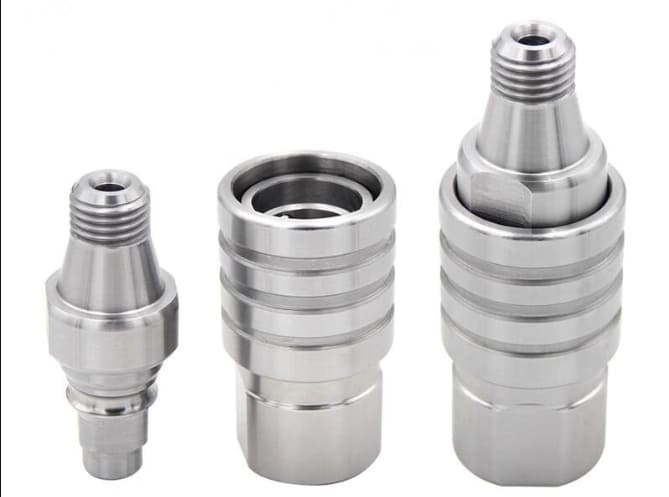
Basically these are connectors which allow you to join or separate gas or fluid lines in just a few seconds. This process needs no tools. Two parts are used in each coupling that fit together to create a leak-free, secure seal.
These connectors can handle very high pressures. For industries that need safe, fast and reliable connections, they are the best choice.
How Quick Disconnect Couplings Work
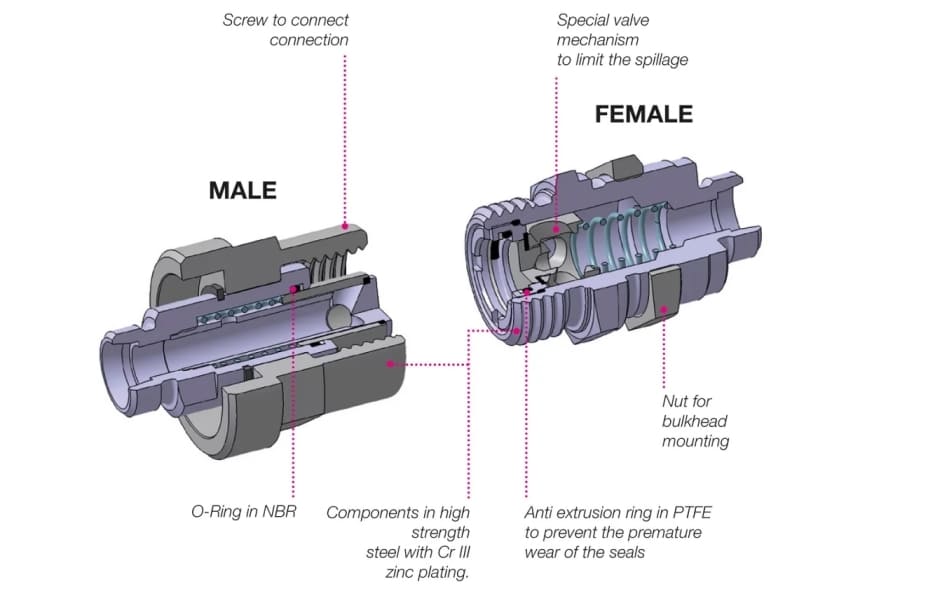
Main Components
In quick disconnect coupling, there are two main pieces – the male (plug) and the female (socket). When these halves lock together, a ball latching or spring loaded system holds them tight. Even with really high pressures of 500 bar, this design keeps the seal leak-proof.
Valve Mechanisms
Different valve types are used in different couplings. Single shut-off valves shut only one side when you disconnect. Whereas double shut-off valves seal both sides so leaks and spills do not happen. In Straight through couplings, no valve is used. This design allows maximum flow but does not provide any shut-off.
Connection & Disconnection Process
Pushing or twisting the two halves together creates the connection. O-ring seals and spring-loaded valves in them make sure the fit stays tight and leak-free. Just pull back the collar or sleeve and the coupler will immediately separate. To prevent fluid from escaping, internal valves get closed.
Types of Quick Disconnect Couplings
By Fluid and Pressure
Hydraulic
Hydraulic couplings come in threaded or flat-face designs. These types can handle high pressures often reaching 5,000 psi or more. Generally they are made from strong metals like stainless steel or carbon steel. For heavy duty machinery and tough conditions, you can rely on these couplings because of their strength and reliability.
Pneumatic
Pneumatic couplings work with air tools or lines. Compared to hydraulic types they are much lighter and are usually made from plastic or brass. These couplings handle lower pressures. Mostly they are used in automotive shops, workshops and manufacturing plants.
Gas/Chemical/Generics
Special quick disconnects are used for chemical or gas lines. In these connectors, double shut-off valves or “dry break” are used to stop spills and protect users from leaks. These couplings are made of special plastics and stainless steel to prevent corrosion. Mostly they are used in fuel handling systems and chemical plants for durability and safety.
By Interface and Design
Cam and Groove
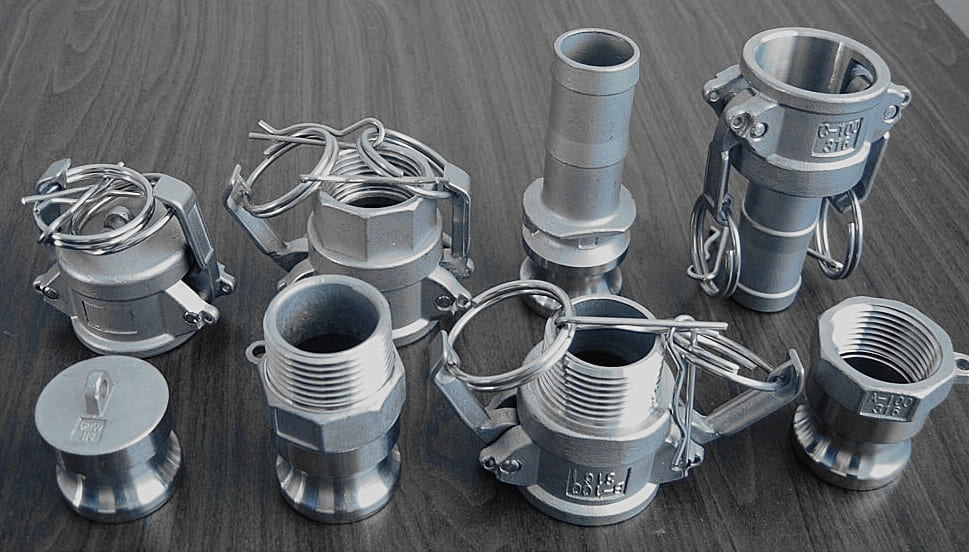
The most commonly used quick connect option for pipes and hoses are cam and groove (camlock) couplings. Their female half has cam arms which lock onto a male adapter. This action forms a leak proof seal. Generally they are made from aluminum, stainless steel or polypropylene. You will find them handling fuels, water, chemicals and even powders.
If you need custom camlock fittings in special materials or with specific surface finishes then RICHCONN is the best option. We can create custom parts exactly the way you need.
Quick-Connect Push-Fit
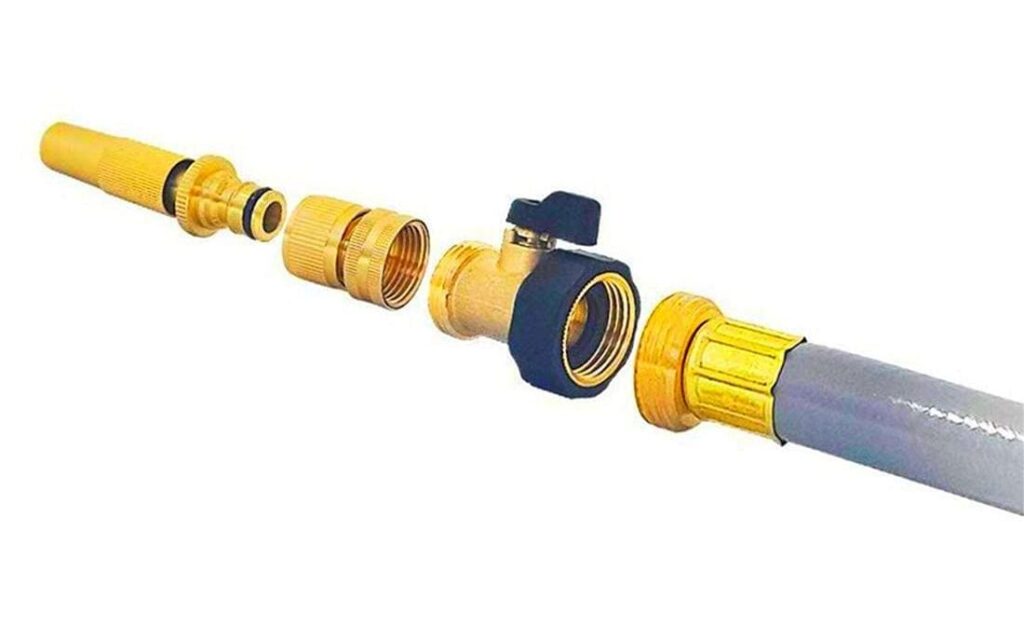
In Push fit couplings, a collet and an O ring is used to create fast connections without tools. Mostly they are used in water filter systems and plumbing. With low pressure lines, they work best and can be installed or removed by hand. Moreover they are useful for tight installation spaces because of their small size.
Multiline and Electro-Fluidic
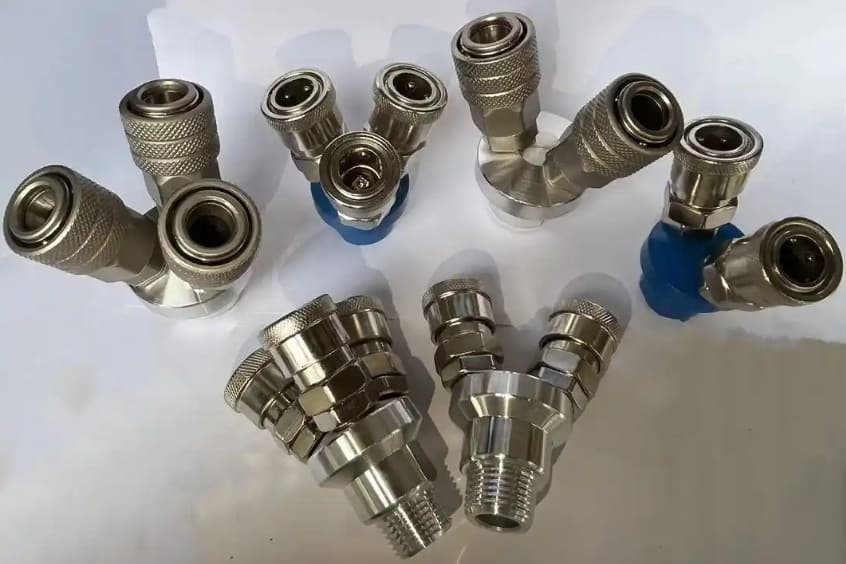
Multiline quick disconnects let you connect multiple fluid lines at the same time with a single movement. In complex machinery, this approach saves time and prevents mistakes. For cooling robotic or electronics tools, electro fluidic couplings are very useful because they can join both electrical and fluid lines. These couplings help you change over automated systems quickly.
Key Benefits of Quick Disconnect Couplings
Serviceability and Modularity
These couplings can be handled with just one hand, no tools needed. This makes maintenance straightforward and fast. During emergency shutdowns or field repairs, this quick service is very important.
Speed and Efficiency
Quick disconnects let you change equipment easily and quickly. Even while wearing gloves, you can connect or disconnect most of them in just seconds. This keeps downtime low and helps your production line stay active.
Safety and Leak Control
In these couplings, automatic shut-off or dry break valves are used. When you disconnect lines, such features stop spills or leaks. As a result workplace hazards decrease and the environment stays protected from gas or fluid exposure.
Compatibility and Flexibility
Quick disconnect couplings come in many materials, sizes and pressure ratings. They can handle water, air, aggressive chemicals and high pressure hydraulics. Because of this versatility, they can be used in almost any system or industry. They also support frequent changes and modular setups.
Selection Guide for Quick Disconnect Couplings
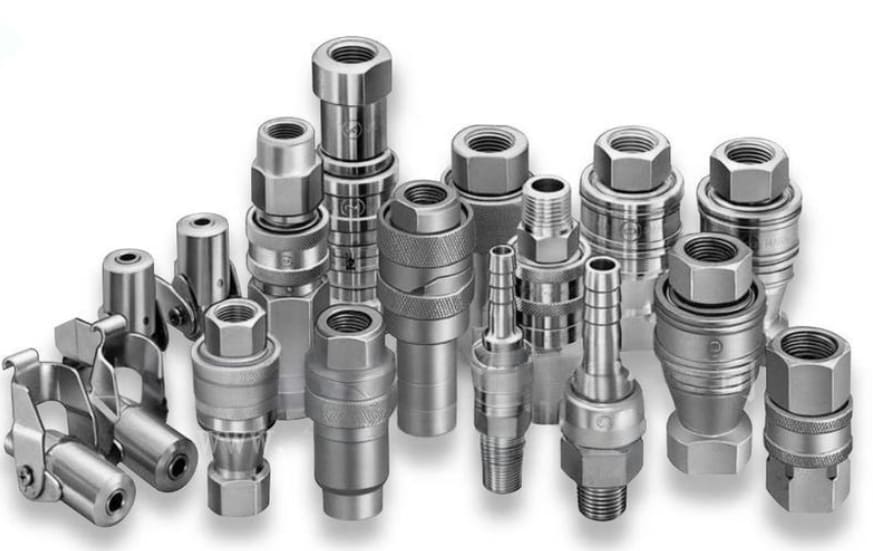
Selecting the right quick disconnect coupling guarantees that your system runs efficiently, safely and reliably. To find the best option for your needs, use this step by step guide.
Fluid Compatibility
First identify the fluid which will pass through the coupling. Pick stainless steel or specialized plastics if your application involves corrosive chemicals. Always use food grade materials for potable water. For gas and hydraulic systems, EPDM or Viton seals are needed to prevent leaks.
At Richconn we provide CNC machining of custom alloys and high performance plastics like 17 4PH stainless or PEEK for increased chemical resistance.
Pressure and Flow
Every coupling comes with a maximum pressure rating. Some models can handle pressures above 10,000 psi while others suit low pressure water or air. Make sure you choose a coupling that has a pressure rating higher than your system’s maximum. Also check the flow rate. If you select a coupling which is too small, you may experience slower processes and pressure drops.
Valve Type
Decide which valve type is best for your needs –double shut-off, single shut-off or straight through. Double shut-off valves block fluid from both sides and prevent spills when disconnecting. Single shut-off valves seal only one side. Straight-through couplings allow the most flow but do not stop leaks; so these coupling are used only when spills are not an issue.
Connection Frequency
Think about how often you will connect and disconnect the coupling. Pick automatic push-to-connect couplings if you need frequent changes. These save time and reduce wear. Manual screw-type couplings provide a cost-effective and secure solution for rare changes.
Material and Temperature
Select a coupling material which is suitable for your environment.
- In harsh environments, stainless steel works well because it resists corrosion.
- For general applications, brass is a solid choice.
- Plastics provide a lightweight option and are useful for demanding tasks.
Always check that your chosen coupling can withstand the temperatures you expect.
Some advanced manufacturers such as RICHCONN provide couplings with high temperature coatings and cryogenic hardening. Such modifications guarantee dependable coupling functionality in both cold and hot environments.
Standards and Interoperability
You should make sure that the coupling complies with industry standards like MIL or ISO. Meeting these standards guarantee that your equipment and replacement parts will be compatible. This makes future upgrades or repairs much simpler.
Applications of Quick Disconnect Couplings
Chemical and Drum Handling
Quick disconnects perform an important part in drum handling and chemical plants. They reduce exposure and help prevent spills when moving hazardous fluids. In such settings, dry break and double shut-off designs are common choices. They protect workers from dangerous chemicals and lower the risk of leaks.
Pneumatic Tools
Air powered tools which are used in workshops and assembly lines benefit from quick disconnect couplings. These couplings allow them to quickly switch grinders, drills or nail guns without turning off the air supply. Because of this approach productivity remains high and hoses last longer.
Industrial and Hydraulic Systems
To keep hydraulic lines efficient, factories and heavy machinery are highly dependent on quick disconnects coupling. These couplings allow them to change machine attachments or hoses quickly on equipment such as tractors, forklifts and construction vehicles. As a result labor costs and downtime decreases.
Medical and Biopharma
In medical and biopharma environments, both sterility and precision are important. Quick disconnects made from animal free materials and USP Class VI are used here which provide contamination free and safe fluid connections. Mostly they are used for dialysis, fluid transfer and laboratory equipment. Using single-use versions helps you avoid cross contamination.
Water Treatment and Plumbing
Quick disconnects help water treatment technicians and plumbers get the job done faster. They make the installation and maintenance of pumps, filters and softeners more efficient. You can easily isolate pipe sections for repairs through these couplings. This reduces water loss and saves time.
Electronics and Liquid Cooling
Electro-fluidic quick disconnects perform an important part in data centers and electronics. They control liquid cooling lines and allow you to service equipment without drips. They help keep downtime to a minimum and protect sensitive electronics from leaks.
To Sum Up
In short, quick disconnect couplings allow you to connect and disconnect air and fluid lines quickly, reliably and safely. Across many industries, their leak prevention, sturdy construction and tool free use improve safety and efficiency.
If you need any kind of CNC machined couplings or any other custom part then Richconn is your best option. You can contact us any time.
Related Questions
Is thread diameter enough to size a quick disconnect coupling?
Thread diameter alone is not enough. To ensure a correct fit, you have to match both nominal and thread size.
Can I use any quick disconnect fitting with another?
You cannot use every quick disconnect fitting together. Only those fittings connect properly which are of same size and type.
What makes flat face couplings different?
In flat face couplings, flat surfaces are used for connection. This design stops fluid leaks when you connect or disconnect which is important for high pressure systems.
Do all quick disconnects keep out water?
Not every quick disconnect is waterproof. In some of them, seals and materials like silicon are used to block dust, water and other contaminants.
How can I avoid damage from twisting or rotation?
If full rotation is needed then use swivel joints. This keeps the connection secure and prevents twisting damage.